
Stories
March 29, 2024
Written by Diane Lemieux
Angel Sulub is a founder and coordinator of the U Kúuchil K Ch’i’ibalo’on community centre in Mexico’s Yucatan peninsula. He defends the rights of indigenous Mayan people by exposing violence against the community, cultivating indigenous cultural heritage, and promoting the preservation of the native environment. Angel was in the Netherlands in Fall 2023 as part of the Shelter City programme and stayed in Nijmegen.
‘The mission in my life is to plant Mayan knowledge for the future. The situation for my people is very difficult today, but in the future, young people will have to fight even more for their rights.’
Angel’s concern for the future is firmly grounded in his direct experience of the past. In the 1930s, his great grandfather fought to maintain the autonomy of Mayan communities. ‘My great grandfather’s example of resistance is my inspiration for the job I do.’
Shrinking and Degrading
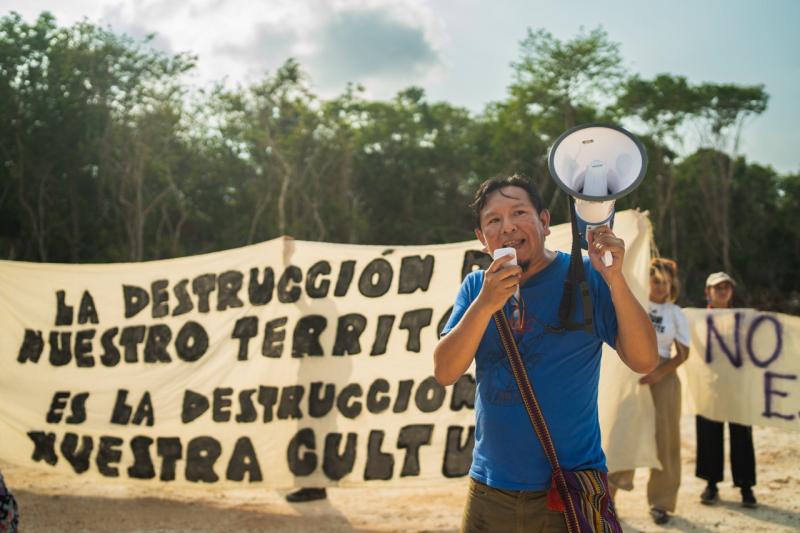
He sees the urgent need for action because since his great grandfather’s time, the conditions under which the Mayan live have only gotten worse.
‘All indigenous people in Mexico, like the Mayan people, experience racism. People don’t value our ancient knowledge. It is very difficult because our language, our culture is at risk because the model of development imposed in our communities. It’s urban, competitive, and individualistic. Mayan culture is communal with solidarity; it’s close to nature and to all sacred elements in the territory. So, if we want to have a good community with harmony, with happy children, we need to defend the integrity of our land.’
Particularly in the past few years, petty crime, disappearances, and violence against the community have all dramatically increased because of the growth of towns and the establishment of military bases near Mayan territory. As Mayans resist the activities of the agro-industrial sector, narco-traffic and the governments imposition of large-scale tourism initiatives such as the Mayan Train1, human rights abuses have become more common.
Self-determination
‘The principal right that the government doesn’t recognise is the right to autonomy, our right to decide what to do in the territory. We should be able to decide if we want a train or if we want tourism or if we don’t want those kinds of projects. These rights are in the constitution and in international laws and agreements that the government has signed. But in reality, they don’t respect our rights.’
Not surprisingly, activists like Angel have been targeted for raising awareness of environmental degradation, poverty, and the challenges Mayans face in accessing public health resources and the justice system. Mexico remains one of the most dangerous countries in the world for human rights defenders, especially indigenous rights defenders2.
Love
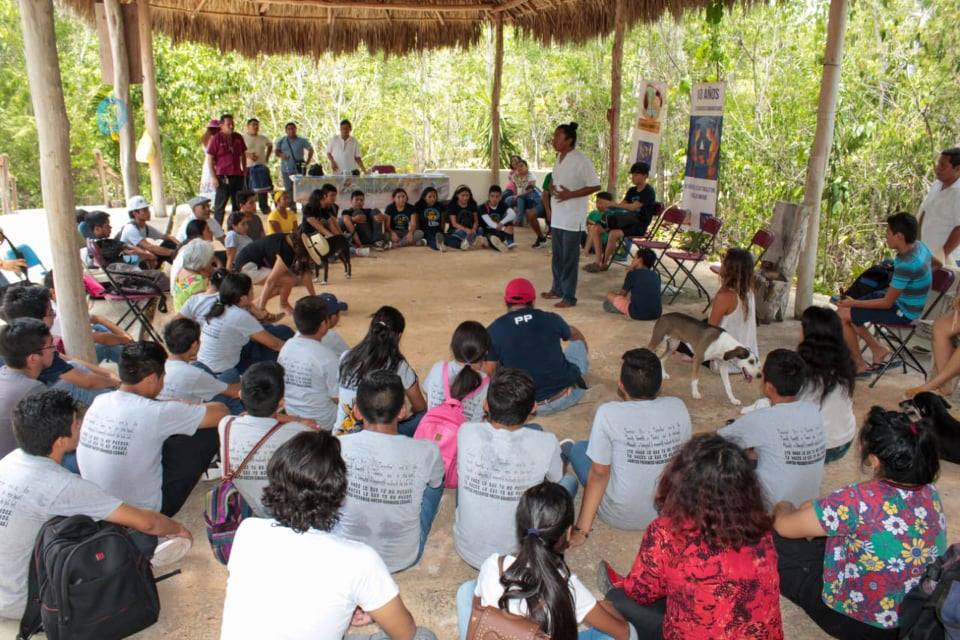
Despite the fact that Angel has received severe threats and harassment online and in person, he has no intention of stopping his work.
‘I love my territory. Not just the jungle, or the ground, or the water, but also the memory of our spirituality and our language.’
And for that to continue into the future, Angel knows that he needs to prepare the next generation.
Memory
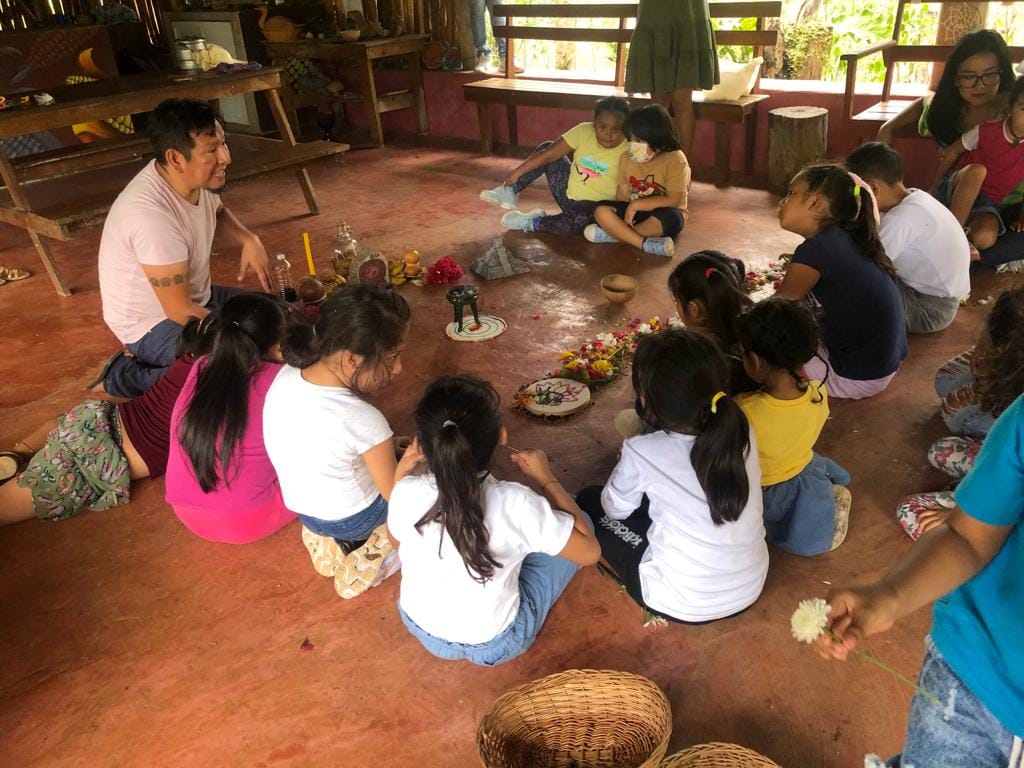
That is why, fifteen years ago, Angel and three other Mayan elders established the U Kúuchil K Ch’i’ibalo’on community center. Alongside his human rights defense work, Angel teaches the Mayan language and culture.
‘The community centre is a spiritual place that promotes community health with Mayan medicine, and cultural memory through the teaching the Mayan language.’
Before the Spanish conquest, Mayans wrote their history in books, known today as codices. Most of those that existed in the Yucatan peninsula were burnt by Catholic priests early in the colonial period. Today, only four codices remain – none of them in the hands of the Mayan themselves. (Three are housed in museums in Europe, and one in the National Museum of Anthropology in Mexico City.)
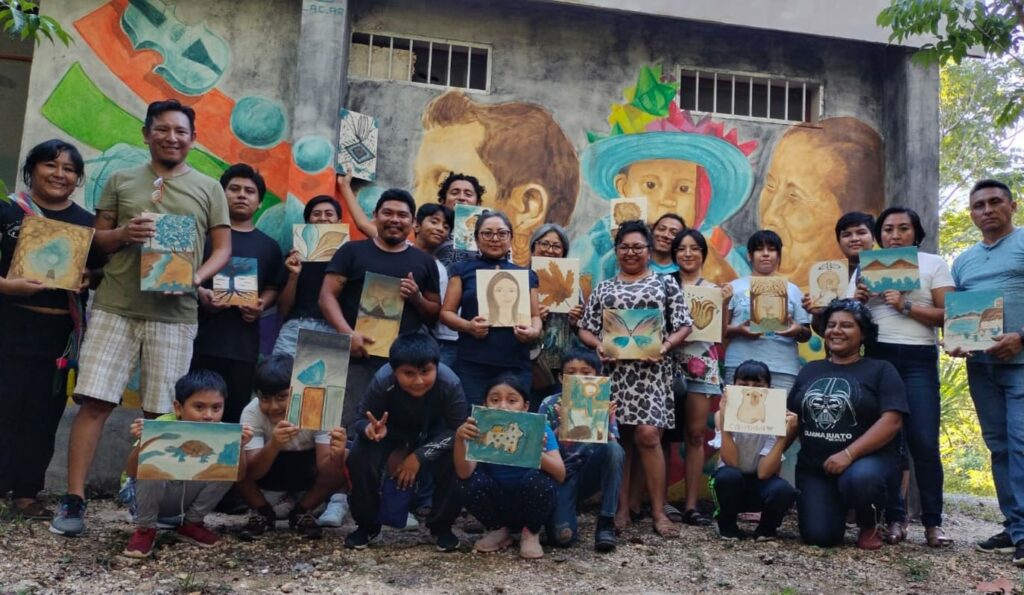
The fact that their history and culture must be handed down by word of mouth underlines the important role of elders as memory holders and teachers for young Mayans today.
What does Angel hope for the future? ‘I want to see children and young people resisting with strong roots, strong identity, children and young people fighting for our territory, our culture.’
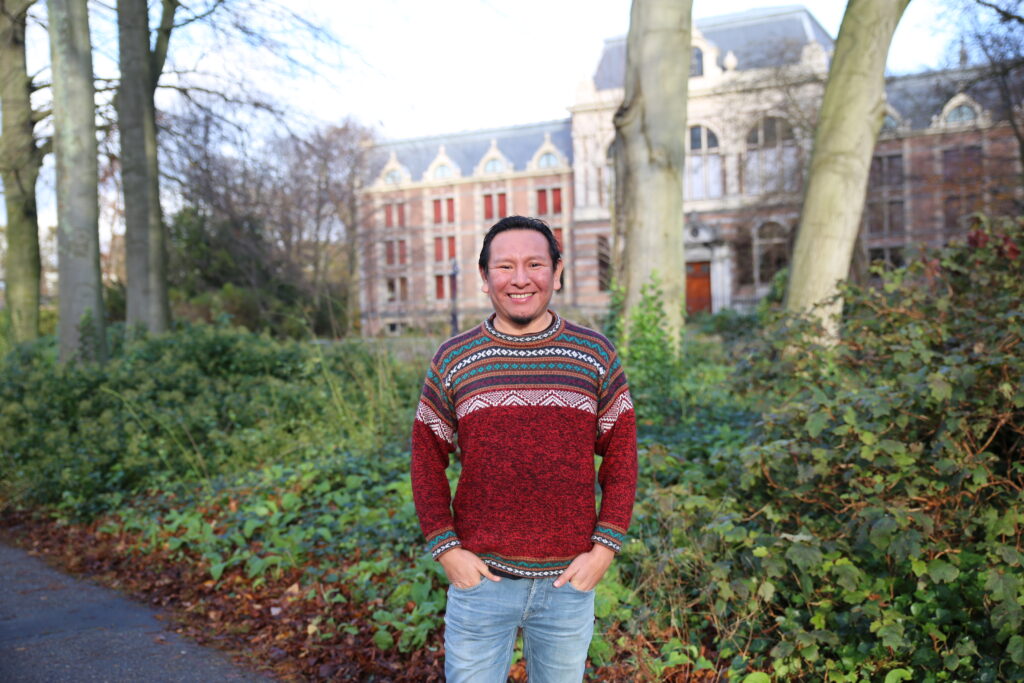
We thank Angel for his story of perseverance and growth.
[1] A mega public works project imposed by the government with the stated goals of increasing tourism and jobs to the region but hotly contested by the Mayans for environmental and cultural reasons.
[2] 2 Centro Mexicano de Derecho Ambiental (CEMDA), Informe sobre la situación de las personas defensoras de los Derechos Humanos Ambientales 2019, (2020)