
Stories
January 20, 2026
Content warning: The following article contains descriptions of sexual violence and violence against LGBTIQA+ persons that might be upsetting or disturbing to some readers.
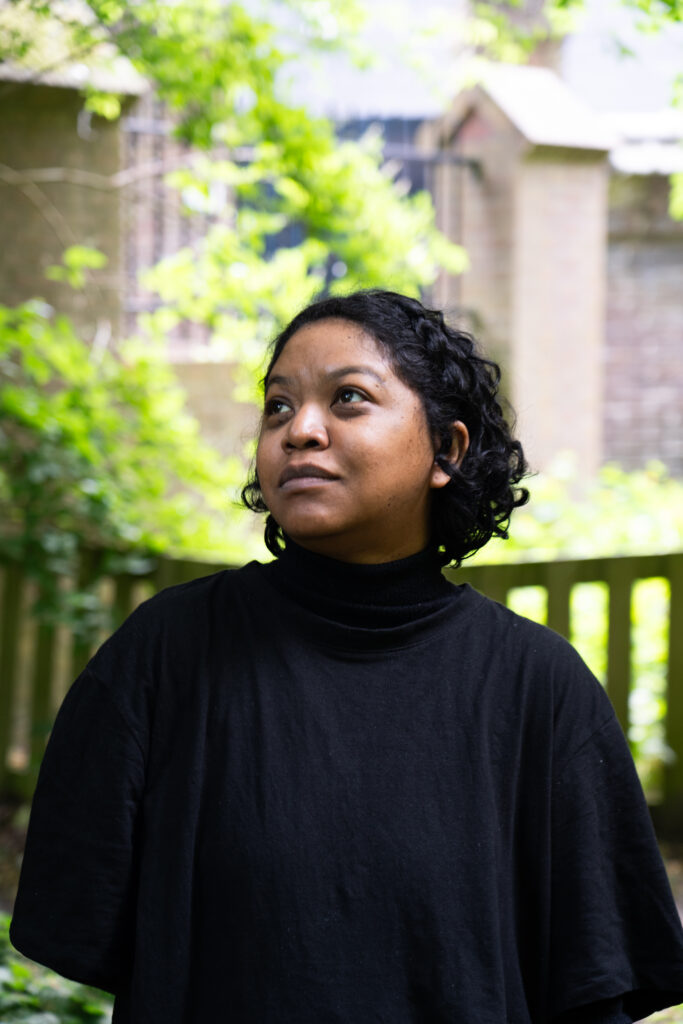
My name is AL, and I’m a defender for the rights of queer and neurodiverse people in Madagascar. I define myself as an agender, neurodiverse, and queer person, as well as a leader. This is how I position myself in my activism in Madagascar and within the bigger queer movement.
It all starts with the personal
Before I came out, the journey was long for me until I discovered that I was not mad, just non-binary. So, when I was finally able to put a label on who I am, I wanted to have a body aligned with my identity. However, LGBTIQA+ rights, same-sex marriages and civil unions are not legally recognized by the Malagasy government and remain strongly condemned by Malagasy society. Moreover, it is impossible to transition physically and change my name. We are supposed to be free to do that, so why are they stopping us from doing that? We can decide what is best for us. It is at that specific point when my contribution to defending human rights began.
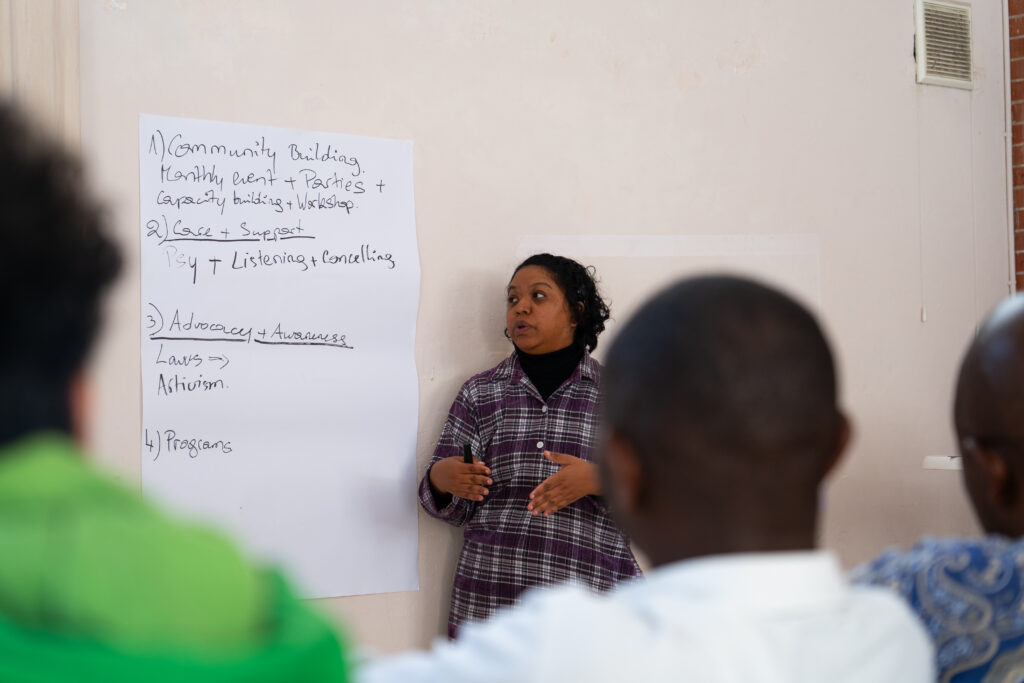
In Madagascar, there are queer communities, but they operated almost like secret societies, making them very difficult for isolated queer people to find. Additionally, a community specifically for trans, non-binary, and gender-queer people did not exist. I really wanted to have friends who could relate, so I created an online space* for non-binary and genderqueer people. And they just appeared, they showed up, and little by little, we became a community. Many people just want a body aligned with who they are inside, however, gender-affirming surgery is illegal in Madagascar. And this is a right our government is denying us. A human right. So, I started researching what human rights are exactly and why those rights are not applied to us in Madagascar. That was in 2020. After joining an organization with the aim to eliminate all forms of discrimination, I decided to focus specifically on transgender and neurodiversity topics, and that is how Queer Place was created in 2022.
People like me can do great things
I am a queer activist, an LGBTIQA+ activist. But I’m also, most importantly, a neurodivergent activist. Neurodivergence is an umbrella term for individuals whose way of communicating and processing information diverges from what might be considered ‘typical’ in many ways. Nobody else was focusing on this at the time. It’s an invisible disability, and the public doesn’t understand how hard it is to navigate society like that. I did not get to choose; I was just born with it.
How do you acknowledge all intersectional identities, such as being queer and neurodivergent, and the value they add to who you are and the activism you are doing? Neurodivergent people like me can do great things. Good things for the community, for society. My friends are bright; they are artists, developers, and doctors. But due to neurodiversity, they cannot thrive as they want to, but instead have to hide their autism, ADHD, and other struggles to fit into a so-called “normal” society. Not everyone is ready to be in the spotlight and openly talk about it. This is the reality we experience, and we are working together to change that.
A part of human nature
Neurodiversity is important simply because it is a part of human nature. We did not choose to be who we are, yet we are here. We are a part of human diversity, and this diversity is beautiful.
I am a survivor of church conversion practices and domestic and institutional violence. Being a weird kid with depression in my teenage years prompted my parent to send me to a “summer camp” to heal. I remember my first day there, all the people I saw were tomboys, feminine boys, queer kids, and I realized that even though my parents brought me there to “heal” my depression, their parents had sent them to the camp to “heal” their queerness. It was thought that in this way we could be saved, but none of us were cursed to begin with.
In my early adulthood, my family exerted intense pressure for me to marry, presenting it as something done “for my own good,” and in some cases, this pressure included explicit threats. I agreed because I was convinced that my soul was torn and very sick. I underwent several exorcisms, which obviously didn’t work and raised many more questions in me about myself, religion, societal practices, and acceptance. There are other conversion alternatives involving quite violent methods, even rape, to “chase the gay away”, as well as being admitted to psychiatric facilities for schizophrenia treatment and medication. It’s not a getaway, it’s torture. Those institutions perpetuate discrimination against us, and the government, fully aware of this, does not protect us.
People should remember, this is my story, but the experiences and trauma are shared among many queer people in Madagascar. How widely these practices are spread and how commonly violence is forced on queer people is outrageous.
Colonialism is not merely a thing of the past
Queer people are discriminated against in multiple dimensions. Because of decades of French colonialism and Christianity, queer history and literature have been erased in my country. Yet, queer people have always existed. Our history is not only for the queer community but a part of Madagascar’s history. It’s such an irony that we must prove our own existence.
In addition, queer people are often deprived of their gender or sexual identities by the public and are assumed to be sex workers in a pejorative way. This is a social situation we face daily. It is exhausting.
From a legal perspective, no proper laws exist to protect us from discrimination. Queer people are being imprisoned or signed into mental hospitals for nonsensical reasons. In Madagascar’s constitution, heterosexual people are allowed to have sexual behavior after turning 14, while the age bar for queer people is raised to 21. I fail to understand the reasoning behind that law.
What is more, Madagascar has signed several international human rights treaties, allowing people to have the body and the identity they want, allowing communities to exist, establishing a good healthcare system, etc. But the government does not abide by their agreements, and since we (queer people) are confronting it to protect ourselves, the government does not like us. But I will not be silent about it anymore.
From zero to growth
I still feel that I lack so much knowledge. I started my activist journey from scratch, with zero knowledge of laws or of who can protect me. I see everything we have realized with my team, my friends, and it still does not feel like it’s enough. There is always a force, a kind of internal pressure, driving you to keep going. We need to do more. We need to be more efficient. And how do you handle that?
There are many challenges. Firstly, fear. When you want to build a community, you can’t just expect people to show up. We need to give them safety, security, and an open space where they can be themselves. A leak of their queer identity can be dangerous. When we are together, boys who like to dress up and use makeup are allowed to do so because it is a safe space; however, everything would change if the police were to hear about it.
We started with five people, and as the community grew, we grew too. We had in mind the concept of a family, and our initial vision was to create the place we needed when we were young. Based on word of mouth, queer people who followed our activities came and brought their friends. We did not receive an income; we were all volunteers. And as it happens, when you start from scratch, the more we realize that we lack the skills to support this growth, the more we develop ourselves. We learned to see the wealth of our expertise and work more sustainably. We have developed great projects with no funding, and we want to maintain our independence, even if it means that we face rejection and instability. Financial insecurity is a recurrent struggle, especially while witnessing what the grassroots community is going through lately. Funding is not continuous and not guaranteed. But we stay resilient.
Reclaiming our power
The queer community is the primary target audience of our work and projects. I have limited trust in the authorities and institutions, the police, the officials. However, at the same time, I recognize the need for the entire community to be in contact with different power actors in order for society to change. Therefore, my colleagues are involved with stakeholder management: funders, partners, etc. In this way, I can focus on the community itself. I am proud of the distribution of work areas: logistics and materials, advocacy, planning, social media, artistic perspective, and volunteer management.
We succeeded in creating a podcast – the first queer podcast in Madagascar. We chose to do that podcast in Malagasy as a political move, considering that in this post-colonial socio-cultural environment, we see our traditional language being absent. Having the podcast in Malagasy feels like reclaiming our power. Apart from this, another project we want to work on is building queer literature. We all have so many stories to tell. Our history has been erased, so we would like to recreate this literature. It may sound ambitious – a living history of queer people.
To address the stigma LGBTIQA+ individuals face, I created a specific programme for intersex individuals and one for neurodivergent people, and we want another for queer artists; a platform where we can express ourselves and create together. You want to talk about dysphoria? Let’s make art about it and show them, so they can understand that’s the spirit behind being queer.
Now people want to take the initiative. Now people want to be at the forefront. They want to learn and teach others the needed skills. Our community wants to be a real community, help each other, and be there for each other. That was my vision, my first vision of Queer Place.
United, we will never be defeated
This year, the main theme is the power of our communities. In a world where communities like ours are not valued, not respected, not protected, we need to organize and build something together because we are here and we have to enjoy our earth journey as we are. We witness increasing polarization and the rise of dictatorships around the world, in regions such as Southeast Asia, and Middle East, as well as rise of far-right governments in Europe. Today, more than ever, we need our communities, all queer communities globally, to be powerful, united. We can support each other. We can uplift each other. We can efficiently build a rainbow nation. If the world doesn’t need us, we can build the world for us. That’s my message.
I have a vision for when I will return after my stay in Shelter City. I will teach what I have learned back to my people in Madagascar. I need us to move together at the same pace, even if we move slowly. There is an alternative future for us. This is the time to be loud.